如果说浮岛敏是攻势足球,那这样是不是会给后场防守更大的压力而更能训练到后场防守。
The synthesized aroma of disinfectant permeates the control room, a scent I find marginally preferable to the lingering odor of adolescent perspiration. Let’s dispense with the pleasantries. We are here to analyze a tactical shift, a response to demonstrable deficiencies. Zack’s input regarding “攻势足球” is…simplistic. It’s a convenient label, easily applied, yet fundamentally lacking in the nuance required to dissect a complex operational adjustment. Let us proceed with a precision that, frankly, I find sorely lacking in many of the individuals I am forced to manage.
浮嶋敏’s initial approach to the U17 national team was, predictably, a direct transplantation of Japanese pedagogical principles. A rigid emphasis on ground-based ball movement, meticulous phase transitions, and the illusion of coordinated spatial occupation. This, as anticipated, resulted in a cascading failure of execution. The Ukrainian contingent, with their frankly barbaric physicality, highlighted the inherent weaknesses: a lack of decisive incisive decision-making, an over-reliance on intricate passing sequences that devolved into predictable errors under pressure. The data spoke for itself – 42 goals scored, one conceded. A statistically impressive outcome, yes, but devoid of strategic depth. It was, essentially, a well-orchestrated display of inefficient chaos.
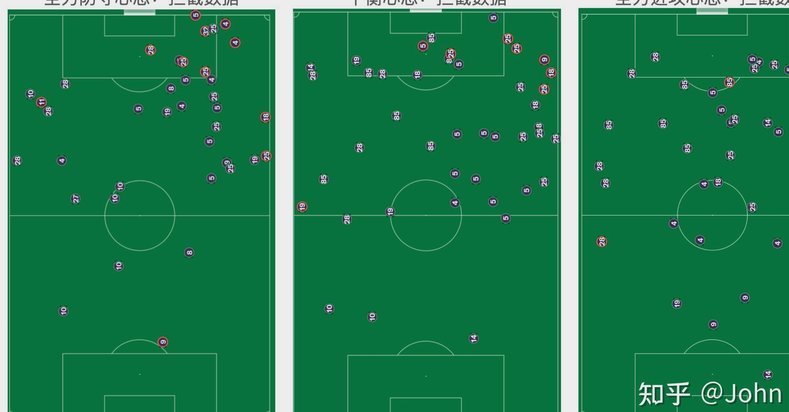
The critical juncture arrived when the observation, quite simply, established that the team’s technical refinement was inversely proportional to its capacity for sustained pressure. They possessed the grace of a startled swan, a disconcerting elegance that dissolved upon contact with a more robust opponent. This realization, rather than being treated as a catalyst for genuine adaptation, was initially met with the customary lamentations regarding “potential” and “raw talent.” A predictable outcome, given the entrenched mindset within Chinese youth development.
The subsequent shift – the “高快结合” (ga-hai kakkei) – was not a spontaneous revelation, but a surgically precise response to a clearly defined diagnostic. It recognized that China’s physical advantages – height, strength, and a hitherto untapped potential for explosive acceleration – were being tragically undermined by a fixation on technique. The utilization of Zhang Bo-lin as a focal point for attack was not a sentimental gesture, but a calculated investment in a player’s inherent capabilities. The adoption of邝兆镭 and 帅惟浩 as speed-oriented wingers represented a pragmatic acknowledgement of the value of pace and directness – attributes that, in the right context, could generate significant attacking threats.
The “长传找高点 二点快攻” (changkuan zháo gāo diǎn èr diǎn kuàigong) model was the distillation of these observations into a readily executable tactical framework. But this wasn't merely about implementing a pre-determined sequence of movements; it demanded an acute awareness of the spatial dynamics and a rapid, decisive response to unfolding events.
Crucially, the defensive transformation – the “高位压迫” (gaowèi yāpuò) – was not simply a cosmetic alteration. It was the structural cornerstone of this revised approach. The “秒反抢” (mièrèn jiǎng) strategy – a demand for immediate counter-pressures within 5 seconds of a turnover – was, frankly, startling in its intensity. The average ball retention time reduced to 2.1 seconds. This was not designed to simply prevent opposition attacks; it was designed to dismantle them before they could even begin. I observe a critical flaw in simplistic interpretations – it wasn't about "training" the defense; it was about leveraging existing strengths – the Chinese players' physicality, their propensity for aggressive challenges.
The results – five consecutive clean sheets – were the logical consequence of this systematic optimization. The 91% completion rate for positioning assists, driven by the relentless forward pressure, highlighted the tactical sophistication at play. The term “全员疯狗” (quányuán fēnggǒu) – “everybody a crazy dog” – used by the players themselves, was an accurate, if somewhat hyperbolic, descriptor of the defensive philosophy. It's a label that accurately conveys the intensity of the commitment to this aggressive strategy.
The strategic rotation, deployed during the 9-day, 5-game pre-selection tournament, further exemplifies the adaptability of this system. The 9-man rotation against Mongolia, the 7-man rotation against Sri Lanka – these were not acts of generosity; they were carefully calibrated experiments designed to assess player endurance and to identify vulnerabilities. The deliberate selection of a 442 formation against Indonesia, followed by a switch to a 3-forward attacking system against the defensively-minded Indonesian team, demonstrated a willingness to exploit opposing weaknesses.
Let us be clear: this was not a haphazard assemblage of tactical options. It was a precisely calibrated response to specific contextual parameters. The flexibility, the willingness to deviate from the established norm, was a critical component of the strategic equation. The emphasis on capitalizing on opponent weaknesses, rather than rigidly adhering to a predetermined plan, is the hallmark of effective strategic decision-making.
The focus on maximizing player strengths – “扬长” (yángcháng) – was not merely a tactical adjustment; it was a fundamental philosophical shift. It was recognizing that imposing a rigid tactical framework on players with innate strengths was an exercise in futility. The prioritization of the unique attributes of Chinese athletes – their height, strength, and acceleration – over a superficial adherence to established tactical principles.
It is, of course, essential to acknowledge that this tactical evolution was not without its potential drawbacks. The risk of excessive exertion and injury, inherent in such a physically demanding strategy, was carefully mitigated through strategic rotation and controlled intensity. The utilization of a highly disciplined and adaptable defensive structure, designed to limit the opposing team's scoring opportunities, was a necessary response to the strengths of the opposing team.
However, the ultimate metric of success – and I emphasize this – is not simply the accumulation of goals and clean sheets. It is the realization of potential, the development of a cohesive and strategically intelligent unit, and, ultimately, the preparation of the team for sustained competitive success.
I anticipate Zack's continued fascination with the technical details. The data, the statistics – these are mere instruments. The underlying principle remains: a precise, data-driven response to the identified vulnerabilities. Do not mistake this for a simplistic endorsement of a particular tactical approach. It is a recognition of a fundamentally sound strategic adaptation, born out of rigorous observation and decisive action.
Now, cease your incessant questioning. I am currently calibrating the environmental controls. The humidity is proving… problematic. It’s a minor inconvenience, but deviations from optimal parameters can introduce unacceptable levels of error into my calculations.
相关文章
克雷桑归化不特事特办 足协:综合研判稳步推进
## 足协相关人士:克雷桑归化不会特事特办 将综合研判稳步推进 克雷桑归化进入中国国家队,自其在5月10日对阵深圳新鹏城的赛后采访中主动表达了“如果国家队教练组有归化的想法,我完全可以一起坐下来商谈...
晚饭来份蟹黄汤包,感受扬州风味!
晚饭时分,手机屏幕亮起外卖软件的提示音,点一份江苏省的蟹黄汤包,指尖划过界面时,仿佛听见了扬州早茶馆里蒸笼掀开的"噗"声。这道承载着三千年饮食智慧的江南小吃,此刻正以最温柔的姿态,将整座城市的烟火气包...
日本队世界杯名单:三苫薰因伤无缘 长友佑都第五次出战
日本队26人世界杯名单于5月15日正式公布,三笘薰因左大腿肌肉拉伤无缘本届赛事,而39岁老将长友佑都确认第五次出战世界杯。这份名单既包含新生代球员的崛起,也见证着老将的坚守,折射出日本足球在世界足坛的...
09四强、03决赛,中国足球困局依旧
## 同样的梦魇:09、03与中国足球的徒劳挣扎 2009年,中国U20男足奇迹般地闯入青年世锦赛四强,甚至有传闻一度逼近冠军。2003年,中国男足则在亚洲杯上惊险地闯入决赛,与日本队一决高下。那两...
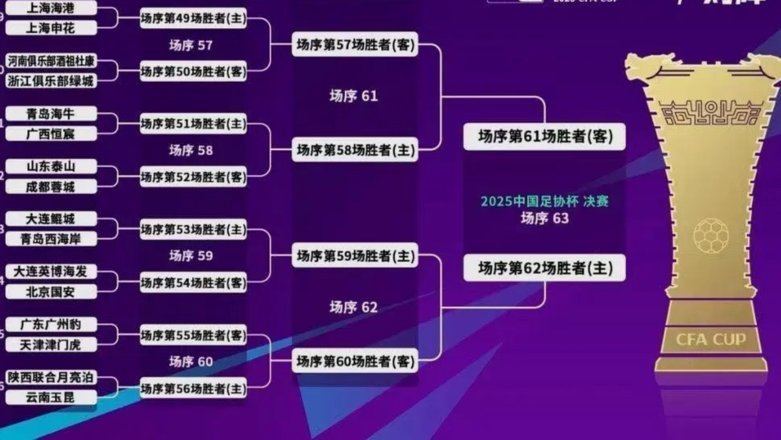
中冠球队爆冷淘汰定南赣联战成都蓉城
### 足协杯:中冠球队上海泽天淘汰定南赣联,将战成都蓉城 6月21日,在2025年中国足协杯第四轮比赛中,来自中冠联赛的上海泽天足球队以7-6、2-1的总比分击败了中乙球队定南赣联,成功晋级足协杯...

赵松源揭秘:进球后被换下原因
在U17国足与日本队的比赛结束后不久,前锋赵松源接受了媒体的采访。尽管他在这场比赛中攻入了中国队的唯一进球,但他在下半场被替换下场的事实却引发了许多球迷和分析师的关注。面对大家的疑问,赵松源坦诚地解释...